
Food is truly bringing people together at Dr. G. W. Williams Secondary School
Posted: July 9, 2026
Categories: nourish to flourish
Operated by the York Region District School Board, Dr. G.W. Williams Secondary School in Aurora, Ontario, serves approximately 1,400 students in Grades 9 to 12. The school recently underwent a historic transformation: after operating in its original 1952 building for over seven decades, students and staff transitioned to a brand-new campus in September 2026, with final construction wrapping up this fall.
Reflecting a diverse student profile, over 50% of students speak a language other than English, and roughly 8% are newcomers from non-English speaking countries. Additionally, 4% are formally identified as Gifted—well above the provincial average of 1.2%.
The International Baccalaureate (IB) Programme draws high achieving students from all across Aurora and neighbouring areas who are seeking an enriched and globally recognized diploma.
Thanks to the “nourish to flourish” grant, the following activities, events and collaboration took place (see the attached slideshow to deepen an understanding towards some of the events):
- Culinary Training & Life Skills
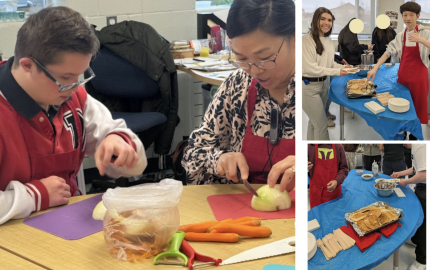
Our Community Class students are mastering healthy, sustainable eating through hands-on culinary training. By preparing fresh, whole-food recipes for the school-wide breakfast program, they are building essential life skills and professional pride.
Students have expanded their expertise by crafting a diverse menu from scratch, including:
Signature Items: Breakfast sandwiches, Greek yogurt parfaits, and overnight oats.
Wholesome Snacks: Homemade granola bars, chia seed pudding, and custom-seasoned popcorn.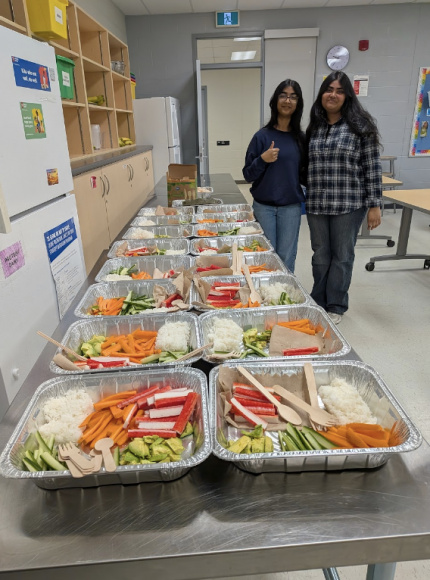
Fresh Favourites: Fruit trays, pancakes, waffles, and nutrient-dense breakfast cookies.
Grant funding also secured high-quality kitchen tools and energy-efficient appliances (including an air fryer, blender, waffle maker, griddle, toaster, and kettle). These user-friendly tools support both beginner and experienced learners, ensuring the long-term sustainability of the program. - The “Green Minds” Sustainability Initiative
IB student leaders are taking charge with Green Minds, a student-led initiative that teaches younger peers the joy of growing their own food. Driven by a passion for sustainability, these student leaders took full ownership of the project by curating resources, selecting and purchasing soil, seeds, and biodegradable pots.
Practical Teaching: Providing interactive, step-by-step gardening demonstrations using specialized tools.
Peer Mentorship: Sharing environmental insights with high school peers and local elementary school students.
This program empowers IB students to exercise real-world initiative while instilling a “from-the-ground-up” appreciation for nature and sustainable food practices. - Solidarity in Leadership Conference
The Solidarity in Leadership Conference is a student-led initiative designed to combat racism and foster community, belonging, and curiosity. Organized by a coalition of 11 diverse student groups, the event hosts 215 participants, comprising 140 visiting Grade 8 students and 75 high school student leaders.
Key Pillars of Impact:
Community & Relationship Building – The collaborative planning process united diverse identity-based clubs under a shared mission of solidarity. At the event, a communal fruit bar creates a social “third space” where Grade 8 students build informal mentorship bonds with older leaders, easing their transition to high school through the universal language of food.
Healthy Eating & Sustainability – Moving away from processed catering, the conference features traditional, ingredient-focused whole fruits and foods. Through the “Culture and Cuisine” workshop, interactive slide decks, and educational handouts, students explore the nutritional value and sustainable preparation methods inherent in traditional Asian diets.
Celebrating Food & Culture – Food serves as a powerful hands-on tool for celebrating global identities. Supported by grant funds, students share whole foods alongside educational pamphlets and digital displays detailing the history and heritage of each dish—transforming a simple meal into a tangible celebration of diversity. - Additional Initiatives: Hydroponic tower and handmade wood planter boxes for herbs and other edible plants, to be housed in various classrooms throughout the school (see photos in slideshow).
One quote shared: “This opportunity is a prime example of how food truly does bring people together.”