
Growing community, connection, and pride
Posted: July 9, 2025
Categories: nourish to flourish / Schools
 Birch Cliff Heights Public School
Toronto, Ontario
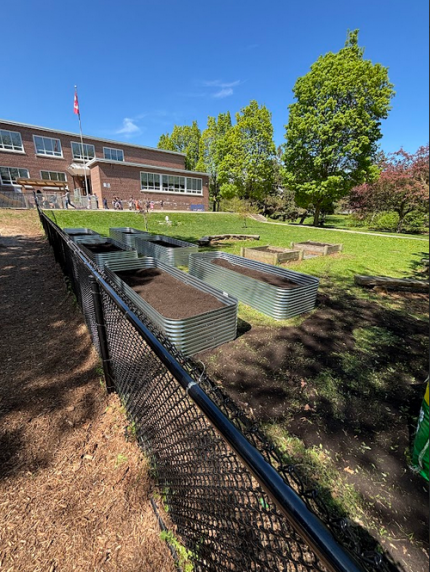
At our Kindergarten to Grade 8 school of approximately 450 students located near the Scarborough Bluffs, the Nourish to Flourish grant has helped us do more than just grow food—we’ve grown community, connection, and pride. With the support of the grant, we built a six-bed school vegetable garden in our schoolyard, and in doing so, created a vibrant, hands-on learning space for every student in our building.
From the very beginning, this project was a true team effort. Every class played a role—whether it was building the garden beds, hauling soil and mulch, cleaning up the yard, designing signage, or growing seedlings in classrooms. The entire process reflected our school’s commitment to experiential learning, inclusion, and environmental stewardship.
Scarborough’s growing season comes with its own unique challenges. Our location near the Bluffs brings unpredictable spring weather and cooler breezes off the lake. But despite these conditions, the vegetable garden has thrived, thanks in large part to the incredible dedication of our staff and community. Mr. Kirsh and Ms. McKechnie were instrumental in championing this initiative. Their passion, perseverance, and countless volunteer hours—often spent before and after school or on weekends—kept the garden alive through its early trials and tribulations. Whether it was rescuing wilting plants or coordinating weekend watering schedules, their efforts ensured that the garden took root and flourished.
The impact of the grant has been deeply felt throughout our school. Students have gained hands-on experience with planting, growing, and caring for food, learning firsthand about ecosystems, sustainability, and nutrition. More importantly, the garden has become a space where students feel seen and valued. As part of our commitment to inclusion, we intentionally planted crops that reflect the cultural backgrounds of our diverse student population. One class planted wild bergamot, another grew Thai basil, while others nurtured Turkish eggplants and peppers. This representation mattered.
As one student put it, “It’s so cool to see plants from my culture growing in our school garden. It feels like a piece of me is always going to be here.”
This sense of belonging and ownership has extended beyond the classroom. Families have volunteered their time to water and care for the garden after hours. It has sparked new conversations, new relationships, and a deeper appreciation for the role food plays in connecting us all.
Of course, this journey has not been without its challenges. Rising material costs stretched our budget, and navigating school board purchasing protocols required patience and persistence. The scale of the project, especially in its first year, was larger than we anticipated, and we had a steep learning curve around what grows best in our specific conditions. But every challenge became a learning opportunity. Students and staff alike have embraced the spirit of trial, error, and growth—both in the soil and in themselves.
Looking ahead, our school garden is now a proud and permanent part of our community. It represents more than just a place to grow food—it’s a living classroom, a cultural celebration, and a shared space where students can see themselves reflected and know that they’ve helped shape something lasting. The Nourish to Flourish grant planted the seed, and our school has come together to help it grow.